Tupac Shakur’s Family Has “Low Expectations” of Justice — As His Long-Awaited Murder Trial Finally Begins
For nearly 30 years, one question has followed the legacy of Tupac Shakur:
Who was responsible for his death?
Now, for the first time, that question is being examined in a Las Vegas courtroom.
The trial of Duane “Keffe D” Davis, the former gang leader accused of orchestrating the 1996 drive-by shooting that killed Tupac, began this week. Davis has pleaded not guilty and is not accused of being the gunman; prosecutors allege that he helped organize the attack and supplied the weapon.
For Tupac’s family, however, the courtroom proceedings aren’t simply another headline.
They reopen a wound that has never completely healed.
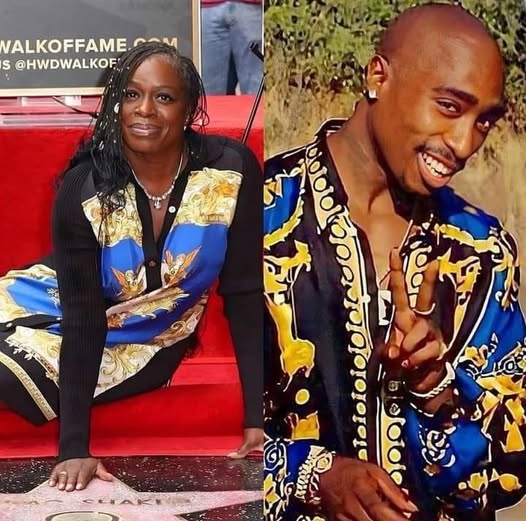
And his sister, Sekyiwa “Set” Shakur, has made clear that her family is approaching the trial with complicated emotions — including a deep lack of confidence that the criminal justice system will necessarily deliver the accountability they have waited decades to see.
THREE DECADES OF QUESTIONS
Tupac Shakur was only 25 when he was shot in Las Vegas on September 7, 1996.
He had been attending the Mike Tyson fight at the MGM Grand earlier that night when an altercation broke out involving members of his entourage and Orlando Anderson, Davis’ nephew.
Hours later, Tupac was riding in a BMW driven by Death Row Records co-founder Marion “Suge” Knight when a white Cadillac pulled alongside the vehicle.
Gunfire erupted.
Tupac was struck multiple times.
He died six days later.
For decades, the murder remained one of the most notorious unsolved cases in American music history.
The unanswered questions became part of Tupac’s mythology.
Fans debated theories.
Documentaries revisited the night.
Investigators continued looking at old evidence.
And Tupac’s family continued living with the absence of a definitive courtroom reckoning.

THEN DUANE DAVIS WAS ARRESTED
Everything changed in 2023.
Duane “Keffe D” Davis was arrested and charged with murder with a deadly weapon in connection with Tupac’s death.
Prosecutors allege that Davis was the person who helped organize the retaliation after the MGM Grand altercation.
Their case relies heavily on Davis’ own previous statements, including comments made in interviews, statements to law enforcement and his 2019 memoir, Compton Street Legend. A judge ruled that the memoir could be used as evidence at trial.
Davis has pleaded not guilty.
His defense has argued that prosecutors are relying on unreliable or fictionalized accounts and that the evidence does not establish that Davis orchestrated the murder.
That dispute is now being placed before a jury.
BUT JUSTICE DOESN’T ERASE 30 YEARS
For Tupac’s family, the trial cannot simply undo what happened.
It cannot bring their son, brother or family member back.
It cannot erase the years of unanswered questions.
It cannot recover the life Tupac might have lived.
And it cannot restore the music, films and ideas that the world never got to experience.
That’s why the family’s attitude toward the trial is so complicated.
They want accountability.
But they also understand that the justice system has already taken nearly three decades to reach this point.
WHY SEKYIWA SHAKUR IS SKEPTICAL
Sekyiwa has spoken about how her family’s history in America shaped their relationship with institutions and law enforcement.
For the Shakur family, distrust of the criminal justice system didn’t begin with Tupac’s murder.
Their history includes decades of experiences with policing, incarceration and the struggles faced by Black Americans.
Their mother, Afeni Shakur, was a former Black Panther who was arrested in the Panther 21 case before later being acquitted.
Their family history therefore makes the question of justice much larger than one criminal case.
It is about whether the system will treat the death of a Black man with the seriousness his family believes it deserves.
And that history helps explain why expectations remain cautious.
THE FAMILY HAS ALREADY WAITED LONG ENOUGH
Think about what happened during those 30 years.
Tupac’s fans grew older.
A new generation discovered his music.
The technology used to investigate crimes changed dramatically.
People who were young when Tupac died became parents and grandparents.
Meanwhile, his family continued carrying the same loss.
The case became part of American pop culture.
But for the people who actually loved Tupac, it was never simply a mystery.
It was personal.
TUPAC WAS MORE THAN A RAPPER
It’s easy to forget just how young Tupac was.
He wasn’t an aging celebrity looking back on a long career.
He was 25.
And yet he had already become one of the most influential artists of his generation.
His music addressed poverty, racism, violence, inequality, family struggles, incarceration and the complicated realities of life in America.
He could be angry.
He could be vulnerable.
He could be political.
He could be romantic.
He could be contradictory.
That complexity was part of his appeal.
And perhaps that’s why his death continues to resonate so strongly.
The world wasn’t simply robbed of a musician.
It was robbed of whatever Tupac might have become.
THE TRIAL IS ABOUT ONE MAN — BUT THE QUESTIONS ARE MUCH BIGGER
Prosecutors don’t need to prove that Davis personally pulled the trigger to pursue the case.
Their argument is that he participated in organizing the attack and supplied the weapon, making him legally responsible under Nevada law if the jury accepts their theory.
The defense, meanwhile, is challenging the reliability of the prosecution’s evidence and Davis’ previous statements.
That means the trial will likely revolve around a difficult question:
What can be proven after almost three decades?
Memories fade.
Witnesses die.
Stories change.
Evidence can disappear.
And some of the people believed to have knowledge of the shooting are no longer alive.
That’s one reason this case is so difficult.
THE FAMILY IS LISTENING
Tupac’s relatives have been present during the proceedings.
For some, watching testimony and evidence is painful enough that they have had to leave the courtroom.
During the trial, members of the family stepped out before prosecutors presented autopsy photographs, while others remained in the courtroom seeking answers and closure.
That detail says everything about what this process means.
There is no easy way to watch evidence concerning the death of someone you love.
Even after 30 years.
THEY DON’T JUST WANT A CONVICTION
Perhaps the most important distinction is that accountability and closure aren’t necessarily the same thing.
A guilty verdict would not erase the grief.
A prison sentence would not give Tupac his future back.
But for his family, establishing what happened could still matter enormously.
They deserve to know what the evidence proves.
They deserve to hear the case presented in court.
And after decades of uncertainty, they deserve an opportunity to confront the truth.
Whatever that truth ultimately turns out to be.
“JUSTICE FOR TUPAC” MEANS SOMETHING DIFFERENT TO EVERYONE
For millions of fans, justice means seeing someone held accountable.
For Tupac’s family, it may mean something more personal:
finally knowing.
Knowing who planned it.
Knowing why.
Knowing what happened.
Knowing what can actually be proven.
And perhaps being able to stop living with the endless uncertainty.
That’s why the trial carries such enormous emotional weight.
A LEGACY THAT REFUSED TO DIE
Tupac’s physical life ended in 1996.
His cultural life never did.
His songs continue to be streamed.
His lyrics continue to be quoted.
His image continues to appear everywhere from documentaries to murals.
Young listeners who weren’t even alive when he died continue discovering his music.
That is an extraordinary legacy.
And it explains why this trial has attracted worldwide attention.
People aren’t simply watching a murder case.
They’re watching the latest chapter in the story of one of the most influential figures in hip-hop history.
AFTER ALL THESE YEARS, THE WORLD IS WATCHING
The trial is expected to feature evidence and testimony attempting to reconstruct the events surrounding that September night in Las Vegas.
Davis faces the possibility of life in prison if convicted.
But for Tupac’s family, the verdict is still somewhere in the future.
For now, they have to sit in a courtroom and listen to a story they have spent three decades trying to understand.
That’s an extraordinary burden.
And it explains why hope and skepticism can exist at the same time.
They can hope for justice.
They can want accountability.
They can want answers.
And still wonder whether the system will actually deliver them.
THE QUESTION THAT HAS NEVER DISAPPEARED
Nearly 30 years ago, Tupac Shakur’s life ended in a hail of gunfire on a Las Vegas street.
His music survived.
His influence survived.
His family survived.
His fans survived.
But the questions survived too.
Now those questions are finally being tested in court.
Whether the prosecution can prove its case remains for the jury to decide.
Whether the trial provides the closure Tupac’s family has waited for remains unknown.
But one thing is certain:
The world has not forgotten Tupac Shakur.
And neither has his family.
For Sekyiwa Shakur and the people closest to Tupac, this isn’t simply about reopening an old case.
It’s about confronting a wound that has been open since 1996.
And after nearly three decades of waiting, they are finally getting their day in court.
Not because the past can be changed.
But because, perhaps, the truth can finally be heard.