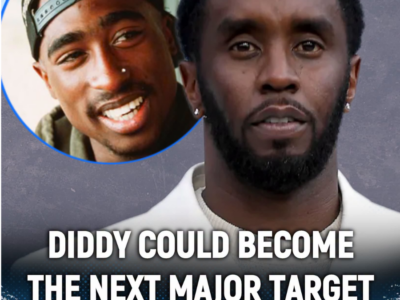
THE INTERNET THINKS TUPAC’S CASE STILL DOESN’T ADD UP… ONE DETAIL FROM THAT LAS VEGAS NIGHT KEEPS RESURFACING
Nearly 30 years after the death of Tupac Shakur, the questions surrounding that September night in Las Vegas have never completely disappeared.
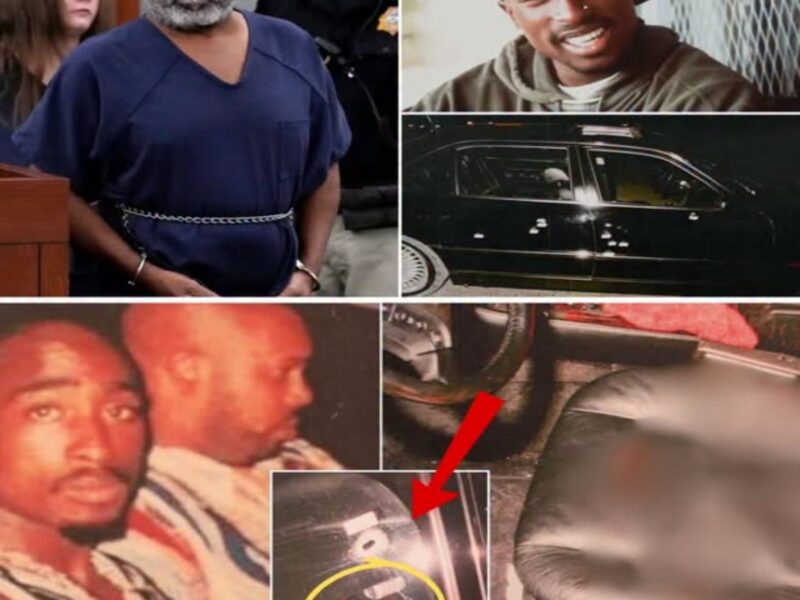
Now, with the murder trial of Duane “Keffe D” Davis underway in Las Vegas, old details are being examined again under the harshest spotlight possible: a courtroom. Prosecutors accuse Davis of helping orchestrate the drive-by shooting, while Davis has pleaded not guilty and his defense argues that his previous accounts were exaggerated.
And one detail keeps coming back:
The white Cadillac.
THE CAR THAT BECAME CENTRAL TO THE CASE
On September 7, 1996, Tupac was riding in a BMW driven by Marion “Suge” Knight after attending the Mike Tyson fight at the MGM Grand.
Earlier that night, Tupac and members of his entourage had been involved in a physical confrontation with Orlando “Baby Lane” Anderson inside the casino.
Later, as Tupac and Knight traveled along the Las Vegas Strip, a white Cadillac pulled alongside their vehicle.
Gunfire erupted.
Tupac was struck four times.
He died six days later at the age of 25.
That white Cadillac has remained one of the most important pieces of the story.
WHO WAS INSIDE?
According to prosecutors and investigators, four men were inside the Cadillac:
- Duane “Keffe D” Davis
- Orlando Anderson
- Deandrae “Freaky” Smith
- Terry “Bubble Up” Brown
All four men are now deceased except Davis.
That fact alone explains why the case remained so difficult for investigators for decades.
The people who could have provided firsthand answers were either unwilling to cooperate, unavailable or dead.
AND THEN DAVIS STARTED TALKING
Years after the shooting, Davis began publicly discussing what happened.
His statements eventually became central to the prosecution’s case.
In a 2008 police interview, Davis described being inside the Cadillac and said he handed the gun to his nephew, Anderson, who then fired toward Tupac’s vehicle. Prosecutors are now using that recording as evidence.
Davis later discussed the shooting publicly and co-authored a 2019 memoir.
But today, his defense is taking a very different position.
THE DEFENSE SAYS: DON’T BELIEVE HIM
Davis’ lawyers argue that his past stories were exaggerated.
Their argument is essentially that Davis was trying to build notoriety, sell books and maintain his reputation — and that his statements should not automatically be treated as reliable confessions.
Reuters reported that the defense has openly urged jurors to disregard Davis’ previous accounts, describing them as fabricated or exaggerated.
That creates one of the strangest elements of the trial:
The prosecution is relying heavily on Davis’ own words.
The defense is telling the jury not to believe those same words.
WHAT ABOUT THE ACTUAL SHOOTER?
This is another question that continues to fascinate the public.
Davis is not accused of personally firing the fatal shots.
Prosecutors allege that he helped organize the attack and provided the weapon, which is enough under Nevada law for an accomplice to face a murder charge if the prosecution proves the required elements.
Anderson was long identified as a suspected shooter, but he died in 1998 without being charged.
More recently, testimony and accounts have also raised questions about whether another passenger, Deandrae Smith, may have fired the weapon.
That’s one reason the details remain so heavily debated.
SO WHY DOES THE CASE STILL “NOT ADD UP” TO SOME PEOPLE?
Because there are still gaps.
Nearly three decades have passed.
Witness memories can change.
People involved in the events have died.
Different accounts have emerged over the years.
And some of the most important evidence comes from statements made long after the shooting.
That doesn’t necessarily mean the prosecution’s case is false.
It means the jury has to decide which evidence is reliable.
THE CASING OF OLD STORIES IS BEING STRIPPED AWAY
For years, Tupac’s death existed partly in the world of rumor.
Fans developed theories.
Documentaries offered different explanations.
Former investigators presented competing narratives.
Names were repeatedly mentioned.
But a courtroom is different.
A theory isn’t enough.
A rumor isn’t enough.
The prosecution has to establish its case with admissible evidence and convince a jury beyond a reasonable doubt.

ONE OF THE BIGGEST QUESTIONS: WHY THAT NIGHT?
Prosecutors have presented the shooting as an act of retaliation.
Their theory is that the earlier MGM Grand confrontation involving Anderson created the motive.
According to the prosecution, the group later located Tupac’s vehicle and carried out the attack.
That theory gives the events of the night a clear sequence:
MGM Grand confrontation
↓
Anger and retaliation
↓
White Cadillac
↓
Following Tupac’s vehicle
↓
Drive-by shooting
↓
Tupac critically wounded
The defense disputes the prosecution’s interpretation.
THE STRANGE THING ABOUT THE CASE
There is something almost surreal about the fact that the alleged crime happened in a busy city and involved a globally famous musician — yet it remained unresolved for decades.
Tupac wasn’t an unknown victim.
He was one of the biggest stars on Earth.
His death became international news.
And still, no one was charged with his killing for nearly three decades.
That is why the current trial feels so significant.
TUPAC’S FAMILY HAS WAITED YEARS FOR ANSWERS
For his family, this isn’t an internet mystery.
It isn’t a documentary.
It isn’t a debate between fans.
It’s the death of a son, brother, friend and cultural icon.
Members of Tupac’s family have attended the proceedings as the trial unfolds, with relatives expressing hope that the process can finally provide some measure of accountability.
THE INTERNET WILL KEEP ASKING QUESTIONS
Even if the trial ultimately produces a verdict, some fans will probably continue debating what happened.
That’s because Tupac’s death became intertwined with some of hip-hop’s biggest rivalries and mysteries.
The East Coast-West Coast conflict.
Death Row Records.
The relationship between Tupac and Biggie.
The MGM Grand confrontation.
The white Cadillac.
The unanswered questions surrounding the shooter.
All of these elements have contributed to the mythology surrounding his death.
BUT NOW THERE IS A COURTROOM
For the first time, the story isn’t simply being reconstructed by documentaries, books or internet theories.
Jurors are hearing evidence.
They are hearing witnesses.
They are hearing recordings.
And they will ultimately have to decide whether prosecutors have proven their case against Davis.
The prosecution says Davis helped orchestrate a revenge attack.
The defense says his previous stories cannot be trusted.
Davis has pleaded not guilty and is presumed innocent unless proven guilty.
THE WHITE CADILLAC STILL HAUNTS THE STORY
Almost three decades later, that vehicle remains one of the most recognizable details of the case.
A white Cadillac moving through Las Vegas.
A BMW carrying Tupac and Knight.
A few seconds of gunfire.
And then one of the most consequential moments in music history.
The details surrounding those seconds are now being examined again.
Not on social media.
Not in a music documentary.
But in a Nevada courtroom.
MAYBE THE BIGGEST QUESTION ISN’T “WHAT IF?”
It’s:
What can actually be proven?
That’s the difference between a mystery and a criminal trial.
The internet can speculate forever.
A jury cannot.
The jury has to separate fact from rumor, evidence from assumption and testimony from stories that may have changed over time.
And that is exactly what makes this trial so important.
TUPAC’S STORY STILL HAS QUESTIONS — BUT THE SEARCH FOR ANSWERS HAS ENTERED A NEW CHAPTER
Tupac Shakur died nearly 30 years ago.
His music survived.
His influence grew.
His legend became larger than almost anyone could have imagined.
But the circumstances of his death remained unresolved.
Now, with Duane Davis on trial, the world is once again looking at that Las Vegas night — the confrontation, the Cadillac, the gun, the statements and the people who were there.
Perhaps the trial will finally answer some of the questions.
Perhaps others will remain.
But one thing is certain:
That night in Las Vegas still hasn’t stopped haunting hip-hop.
And as the evidence is examined in court, the detail that keeps resurfacing — that mysterious white Cadillac — remains at the heart of one of music history’s most enduring mysteries. 🕊️🎤