Sadio Mané Launches a 500-Hectare Agro-Industrial Park in Senegal — From Football Superstar to Builder of a New Future
Sadio Mané is proving that his biggest legacy may extend far beyond football.
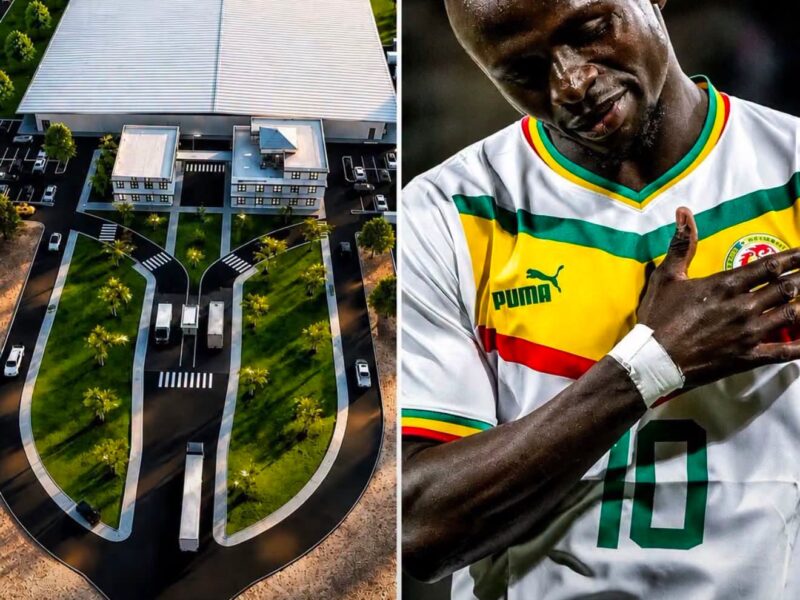
The Senegalese superstar has taken another major step in his mission to invest in the future of his homeland, launching the Bambaly Agro-Industrial Park, a huge agricultural project covering approximately 500 hectares in Casamance through his SM10 Agro initiative.
For a player who once grew up in Bambali dreaming of becoming a professional footballer, the project carries a powerful meaning.
This is not simply another business investment.
It is a return to his roots.
It is an attempt to create opportunities.
And it represents the kind of legacy Mané appears determined to build after spending years making history on football pitches around the world.
FROM BAMBALI TO THE WORLD
Sadio Mané’s story has always been different.
He was born in Bambali, a rural community in Senegal’s Sédhiou region.
As a child, his dream was simple:
Become a professional footballer.
That dream eventually took him from Senegal to Europe.
Metz.
Red Bull Salzburg.
Southampton.
Liverpool.
Bayern Munich.
And later Al-Nassr.
Along the way, Mané became one of Africa’s most successful footballers.
He won the Champions League.
He won the Premier League.
He won the Africa Cup of Nations with Senegal.
He became one of Liverpool’s most feared attackers.
But despite achieving global fame and enormous financial success, Mané never forgot where he came from.
And now, he is investing in the place that shaped him.
A 500-HECTARE VISION
The Bambaly Agro-Industrial Park is designed as a major agricultural development rather than simply a traditional farm.
The project, associated with SM10 Agro, is intended to create a large-scale agricultural ecosystem capable of producing, processing and adding value to agricultural products locally.
That distinction is important.
Agriculture can generate employment.
Processing can create additional industries.
Local production can strengthen food security.
And businesses built around agriculture can create opportunities for people who might otherwise have to leave their communities in search of work.
The ambition is therefore much larger than planting crops.
It is about building an economic ecosystem.
WHY CASAMANCE?
Casamance has enormous agricultural potential.
The region is known for its fertile land, forests, rivers and agricultural traditions.
Rice, vegetables, fruits and other crops are already important to communities throughout the area.
Yet like many rural regions, Casamance faces challenges involving infrastructure, investment, processing capacity and access to markets.
That is why a large-scale project in Bambali could be significant.
Instead of simply exporting raw agricultural products, the objective can be to develop more of the value chain locally.
Grow it.
Process it.
Package it.
Sell it.
And create jobs along the way.

MANÉ IS THINKING BEYOND FOOTBALL
There is something particularly powerful about athletes using their wealth to build businesses in their home countries.
A football career can last only so long.
Even the greatest players eventually retire.
But infrastructure can remain.
Businesses can remain.
Schools can remain.
Hospitals can remain.
And jobs can transform families for generations.
Mané has already demonstrated this philosophy through investments and charitable projects in Senegal.
He has supported the construction of schools and healthcare facilities in his hometown.
He has contributed to community infrastructure.
And he has repeatedly spoken about his desire to give something back to the people who supported him before he became famous.
The agricultural park represents another chapter of that vision.
THE FARMER’S SON WHO BECAME A GLOBAL STAR
Mané’s relationship with agriculture also carries a deeply personal dimension.
He did not grow up disconnected from rural life.
He grew up in a community where agriculture was part of everyday existence.
That experience gives his investment a different meaning.
This isn’t a celebrity randomly choosing agriculture because it is fashionable.
It is an industry connected to his roots.
He understands the importance of land.
He understands rural communities.
And he understands how difficult it can be for young people in villages to imagine a future without leaving home.
CREATING OPPORTUNITIES FOR YOUNG PEOPLE
One of the biggest challenges facing rural communities is youth employment.
Young people often leave villages for larger cities because they believe that’s where the opportunities are.
Agricultural development can potentially change that equation.
A modern agro-industrial park can require workers across multiple sectors:
- Farming
- Irrigation
- Machinery
- Transportation
- Processing
- Packaging
- Administration
- Logistics
- Marketing
- Maintenance
- Technology
That means one agricultural project can potentially create an entire network of employment.
And that is where the real impact can begin.
AGRICULTURE NEEDS TECHNOLOGY TOO
Modern agriculture is no longer simply about planting seeds and waiting for rain.
Technology can dramatically improve productivity.
Irrigation systems can make water usage more efficient.
Modern machinery can increase productivity.
Data can help farmers understand soil conditions.
Storage systems can reduce waste.
Processing facilities can extend the life of agricultural products.
And better logistics can connect rural producers to national and international markets.
For a project of 500 hectares, these technologies can make an enormous difference.
FROM RAW PRODUCTS TO VALUE-ADDED GOODS
One of the biggest opportunities in African agriculture is moving beyond the export of raw materials.
Imagine a farmer growing a crop.
If the crop is sold immediately as a raw agricultural product, much of the potential economic value may be created elsewhere.
But if the same crop is processed locally, it can create additional jobs and businesses.
The farmer benefits.
The factory benefits.
The transportation sector benefits.
The packaging industry benefits.
Local shops benefit.
And the community benefits.
That is the logic behind agro-industrial development.
It creates an entire chain of economic activity.
SM10 AGRO: A DIFFERENT KIND OF FOOTBALL LEGACY
Sadio Mané’s name became famous because of goals.
But SM10 Agro represents a different kind of ambition.
The number “10” is closely associated with Mané’s identity.
It represents the footballer.
But the agricultural project represents the businessman.
The investor.
The community leader.
And perhaps most importantly:
the son of Bambali.
His football career made his name global.
His investments can make his impact local.
HE COULD HAVE INVESTED ANYWHERE
This is one of the most important aspects of the story.
Mané could have chosen to put his money into businesses in Europe.
He could have focused entirely on luxury investments.
He could have simply enjoyed his wealth.
Instead, he is directing significant attention toward Senegal.
That doesn’t mean every project will succeed automatically.
Agriculture is difficult.
Weather can change.
Markets fluctuate.
Infrastructure can create obstacles.
Management is complicated.
And large projects require years of patience.
But choosing to invest in the local economy is significant in itself.
A NEW DEFINITION OF SUCCESS
For much of his career, Mané’s success was measured in goals and trophies.
How many goals did he score?
How many trophies did he win?
How many finals did he play?
How many records did he break?
Now the questions can be different.
How many people will find employment?
How many farmers will gain access to better markets?
How much agricultural production can be developed?
How many young people can build careers without leaving home?
How much value can remain in the local economy?
Those are very different statistics.
But perhaps they are the ones that matter most in the long term.
HIS LIVERPOOL YEARS MADE HIM A GLOBAL ICON
Liverpool supporters will always remember Mané for his football.
He arrived from Southampton in 2016 and quickly established himself as one of the Premier League’s most dangerous forwards.
Alongside Mohamed Salah and Roberto Firmino, he formed one of the most famous attacking trios in modern football.
Together, they helped Liverpool win:
The Champions League.
The Premier League.
The FIFA Club World Cup.
The UEFA Super Cup.
The FA Cup.
The League Cup.
Mané became a legend at Anfield.
But his story was always bigger than football.
SENEGAL’S PRIDE
Then came the moment every Senegalese footballer dreams about.
The Africa Cup of Nations.
In 2022, Senegal won the tournament for the first time in its history.
Mané was central to the triumph.
For a country that had waited generations for continental glory, the victory meant everything.
Mané had already become a global superstar.
But lifting that trophy with Senegal gave his career another dimension.
He wasn’t simply playing for himself.
He was representing millions of people.
NOW HE IS REPRESENTING THEM IN A DIFFERENT WAY
The Bambali project is another form of representation.
Instead of wearing Senegal’s shirt, Mané is investing in Senegal’s future.
Instead of scoring a goal, he is helping build an economic project.
Instead of celebrating a trophy, he can potentially celebrate jobs, businesses and opportunities.
That is a different kind of victory.
And perhaps one that lasts much longer.
THE IMPORTANCE OF LOCAL OWNERSHIP
Large-scale development projects can have enormous economic benefits when local communities are genuinely included.
The goal should not simply be to build something impressive.
The real measure of success is whether people living around the project benefit from it.
Employment.
Training.
Local suppliers.
Small businesses.
Farmers.
Transport operators.
Young entrepreneurs.
If those connections are developed successfully, an agro-industrial park can become more than a farm.
It can become a regional economic engine.
A LEGACY FOR THE NEXT GENERATION
Imagine a child growing up in Bambali today.
Perhaps that child loves football.
Perhaps they dream of becoming the next Sadio Mané.
But now there could be another possibility.
Maybe they become an agricultural engineer.
Maybe they work with modern irrigation technology.
Maybe they become a logistics manager.
Maybe they start a food-processing company.
Maybe they become an entrepreneur.
Maybe they work in a local factory instead of having to leave home.
That is the kind of possibility development can create.
MANÉ’S STORY HAS COME FULL CIRCLE
There is something almost poetic about it.
A young boy leaves Bambali chasing a football dream.
He travels thousands of kilometres.
He plays in Europe’s biggest stadiums.
He wins the Champions League.
He becomes a Premier League champion.
He becomes an African champion.
He becomes one of the world’s most recognizable footballers.
And then he looks back toward home.
Not simply to build a mansion.
Not simply to spend his money.
But to invest in the land and communities that shaped him.
That is a full-circle story.
FOOTBALLERS CAN CHANGE PERCEPTIONS
African footballers are often celebrated for what they accomplish overseas.
But players like Mané are also showing that success can be brought back home.
The message is powerful:
You can leave Senegal without leaving Senegal behind.
You can build an international career and still remain connected to your community.
You can earn global fame and use it to draw attention to local opportunities.
And you can turn personal success into something that potentially benefits others.
THE ROAD AHEAD WILL NOT BE EASY
It would be unrealistic to pretend that a 500-hectare agricultural project will transform an entire region overnight.
It won’t.
Large agricultural projects require capital, expertise, infrastructure and long-term management.
There will be challenges.
There will be setbacks.
There will be difficult seasons.
There will be market pressures.
But the important thing is that the project creates a foundation.
A foundation that can grow.
A foundation that can employ people.
A foundation that can attract additional investment.
A foundation that can inspire other successful Senegalese citizens to consider investing at home.
FROM GOALS TO GROWTH
Sadio Mané spent years learning how to turn opportunities into goals.
Now he is attempting something completely different:
Turning land into opportunity.
And perhaps that’s the most fascinating part of this story.
The footballer who once measured his success in goals is now entering a world where success is measured in productivity, jobs, businesses and community development.
It’s a completely different game.
But the mentality may be the same.
Work hard.
Stay disciplined.
Think long term.
And never forget where you started.
THE LEGACY AFTER THE FINAL WHISTLE
One day, Sadio Mané will no longer play professional football.
The boots will be put away.
The stadium lights will move on to another generation.
Young players will take his place.
Records will eventually be broken.
But projects like Bambali Agro-Industrial Park can continue.
If successful, the fields will still be there.
Workers will still be employed.
Businesses will still operate.
Young people will still have opportunities.
And the name Sadio Mané may become associated with something much larger than football.
A DIFFERENT KIND OF TROPHY
Football gave Sadio Mané trophies.
But perhaps his next trophies will look different.
A farmer getting a better income.
A young person finding their first job.
A family building a more secure future.
A local business finding a new customer.
A child growing up believing there is a future in their own community.
Those achievements won’t fit inside a trophy cabinet.
But they may be worth far more.
FROM BAMBALI, WITH A VISION FOR THE FUTURE
Sadio Mané’s journey has already been extraordinary.
From a rural village in Senegal to the biggest stadiums in Europe.
From dreaming about becoming a footballer to becoming an African champion.
From scoring goals at Anfield to building opportunities back home.
And now, through the Bambaly Agro-Industrial Park, he is attempting to write another chapter.
A chapter that isn’t about football.
It is about agriculture.
It is about jobs.
It is about investment.
It is about opportunity.
And above all, it is about giving something back.
Because sometimes the greatest legacy of a football superstar isn’t the number of goals he scored.
It is what he builds after the goals stop.
Sadio Mané has already conquered football.
Now, he is trying to help build a future for Bambali.