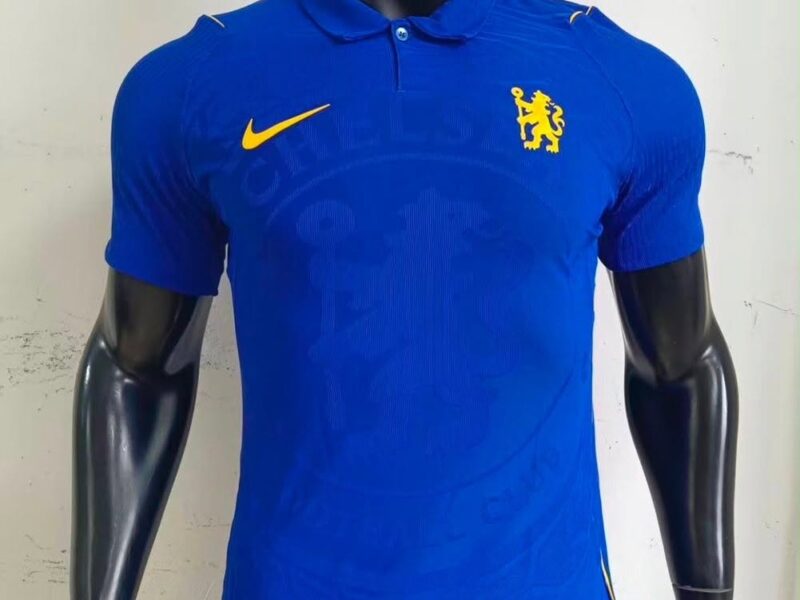
Chelsea’s lack of a long-term shirt sponsor is a calculated risk. Will it pay off?
Chelsea are outliers in multiple ways.
Whether that’s having the youngest squad in the Premier League this season when weighted by minutes played, or their proactive transfer strategy, which has seen them already agree deals for four new young players to join next summer. Chelsea also are the only Premier League side without a front-of-shirt sponsor, and sources at the club to who The Athletic spoke for this article — all of who asked to remain anonymous to protect relationships — believe their unusual approach will pay off.
Readers can be forgiven for a sense of deja vu. In late December 2024, The Athletic took an in-depth look at Chelsea’s shirt-front sponsorship situation. Though there was a brief partnership with property company DAMAC at the end of 2024-25, no long-term deal has since been announced.
The latest Football Money League report from Deloitte sheds more light on Chelsea’s revenues. Being one of only six Premier League clubs in the top 10 is a positive, and they have achieved that without a front-of-shirt sponsor. However, they are behind Liverpool, Manchester City, Arsenal, Manchester United and Tottenham. While a lack of front-of-shirt sponsorship is not the only reason for this, the gap would be smaller if they had one. Chelsea’s commercial revenue — £201m for 2024-25 — sits more than £60m behind the above five clubs.
Sources at the club have indicated that talks with multiple parties are ongoing and they still expect to have something in place before the end of this season. Chelsea came close to an agreement with one company a few months ago, but complications arose and caused the deal to stall. They are still in talks with that same potential sponsor.
Chelsea sources say they have been considering two options: agreeing to a proposal for the rest of the campaign and then taking it from there, or a straight long-term deal. Naturally, which path they choose depends on the terms being right. But while fans and those on the outside question the lack of progress, people at the club remain relatively relaxed about the situation. They consider it only one part of their wider commercial strategy.
Chelsea have not had a long-term front-of-shirt partner since their deal with telecommunications company Three finished at the end of the 2022-23 season. Since then, that area of their kit has been sponsored by Infinite Athlete from September 2023 for the rest of that campaign, and then briefly by DAMAC for seven games over the final weeks of last season.
It is a marked change from their previous pattern, which saw successive multi-year partnerships with Three, Yokohama Tyres and Samsung. Between 2005 and 2023, Chelsea had only three front-of-shirt partners. Since the deal with Three ended just over two years ago, they have had two, and there have been sizeable gaps where there has been no sponsor on their players’ chests.

Chelsea’s last long-term sponsors were ThreeOli Scarff/AFP via Getty Images
“It’s obviously the club’s biggest sponsorship asset,” Joe Williams, director at London-based sports sponsorship company WH Sports, tells The Athletic. “They’re certainly missing out on a lot of revenue by not having a partner there. But I think they’re hell-bent on getting the right partner.”
There is a view that they have not been attractive to possible longer-term sponsors as their on-pitch performance has not been consistent.
A sponsorship expert, speaking on the condition of anonymity to protect relationships, says: “When sponsors are investing the kind of money that Chelsea would have expected over multiple years, they would have wanted to see some stability and assurance that the club will be competing at the highest level, both domestically and internationally.”
Under previous owner Roman Abramovich, Williams says, sponsors knew what they were getting into with Chelsea. “You were backing a club that you expected to be in the Champions League and competing for the top honours,” he says. “When Three decided not to renew, they went into a phase of quite high uncertainty.”
When Three’s deal ended, Chelsea had just finished 12th in the Premier League, and the new ownership under Todd Boehly and Clearlake Capital had only been in place for a year. By coming sixth and fourth in the following two seasons, plus winning the Conference League and Club World Cup in 2025, Chelsea could argue they are making the right kind of progress. They are back in the Champions League this term after a two-year absence and could qualify for it next season, sitting sixth in the Premier League.
Sources at Chelsea insist the lack of a front-of-shirt sponsor has nothing to do with on-pitch performance and say they have held off agreeing on a long-term deal to ensure the best possible outcome, with a partner that matches their status and is aligned with their values in terms of innovation and ambition.
“You could argue that (Chelsea) also wanted to get themselves in a position where they could command a sponsor close to the levels of where their peers are at Liverpool, Manchester City and Manchester United, and they were prepared to forgo some of the revenue in the process,” says the anonymous expert.
Manchester United’s sponsorship by Snapdragon is worth $75million per year (£56.1m at current rates).
The expert continues: “They were prepared to wait, obviously believed in what they were doing, until they got themselves in a position where the story to a sponsor would be much more compelling. And you could argue they’ve done that.”
The fact that improvements on the pitch did not immediately yield a deal before the start of this season is not necessarily surprising. “I think everyone certainly expected them to have a new partner by now, but it’s never easy,” Williams says. “However big the club is, selling a large sponsorable asset does take time.”
The anonymous expert to whom The Athletic spoke estimated that sponsorships of this magnitude could take up to a year from initial conversations being held to a deal being completed.

Chelsea ended last season sponsored by DAMACWarren Little/Getty Images
A Chelsea source gave examples of how deals can be delayed. If talks were being held over a long-term deal with an interested party and that party requested the club did not have another partner in that field for the duration of the contract, it might be better to say no rather than have another source of income negatively impacted in the long term.
Williams also points out that Chelsea have become more stable off the pitch. There have been significant personnel changes on the commercial side of the club since the Boehly-Clearlake consortium took charge. Todd Kline initially joined the club from Tottenham Hotspur in 2024 and was made president of commercial in September 2025, at the same time as Casper Stylsvig left his role as chief revenue officer. Kline is leading Chelsea’s search for a front-of-shirt sponsor.
Sources within Chelsea say that their perspective is clear: there have been good reasons not to rush into a deal.
“I think the club have always been adamant about their status within world football, their status within London, their status within the Premier League,” Williams says. “I think they felt: ‘Why take a smaller number when we want to hold out for the right brand and the right number?’”
The logic, according to one club source, is that Chelsea are happy to swallow the cost of not having a sponsor because they would rather do that than tie themselves down to a long-term deal below what they perceive to be their market value.
Chelsea sources offered their perspective and talked through various other revenues that can help make up the shortfall from not having a front-of-shirt sponsor.
New hospitality is launching in the Millennium Suites at Stamford Bridge, which one source at the club said could be worth millions. Chelsea are also working on other sponsorships, such as for their training ground at Cobham. Arsenal’s London Colney facility is known as the Sobha Realty Training Centre for sponsorship reasons.
The club have 13 global partners. A Chelsea source added: “In football, what is better? One player who scores 40 goals or six who score 10 each?” Factors such as player sales and prize money can bring revenue to the club, too. Chelsea earned in excess of £84million from winning the Club World Cup.
Chelsea are confident of hitting revenue goals for the commercial side in 2025-26. One source indicated there have been improvements to gate receipts, hospitality, digital and retail revenue. They also indicated that retail results, which have been behind other clubs, have improved. Not having the revenue from a front-of-shirt sponsor is not ideal, but other revenue streams mean the club are relaxed about the situation, and want to take their time to push for the deal they want.
In October, the club announced a sleeve sponsorship deal with Vietnamese technology company FPT that runs until the end of the campaign. Chelsea are working on a multi-year sleeve sponsor for 2026 onwards.

Chelsea recently announced a sleeve sponsorship deal with FPTGeorge Wood/Getty Images
So where will their front-of-shirt sponsor come from? Not gambling, which will not be a shirt-front option for Premier League clubs from next season. Chelsea were in discussions with gambling company Stake in 2023, but a fan survey conducted by the Chelsea Supporters’ Trust found strong opposition to the partnership and no deal was agreed. Eleven Premier League clubs will need to replace their current front-of-shirt sponsors when a ban on betting sponsors on shirt-fronts comes into force from the beginning of next season, but Williams does not anticipate that impacting Chelsea’s search for a sponsor.
One source indicated that technology and financial services are among the fields being targeted.
“I think Chelsea will probably want to look beyond just a financial investment and look at how a partner, particularly in the tech and AI space, can help to accelerate other areas of their business,” the anonymous expert says. “That could be data, that could be fan engagement, it could be growth of their fanbase, it could be all sorts of things.”
As with their on-pitch strategy, Chelsea are taking a calculated risk. But their perspective is that it will be rewarded.