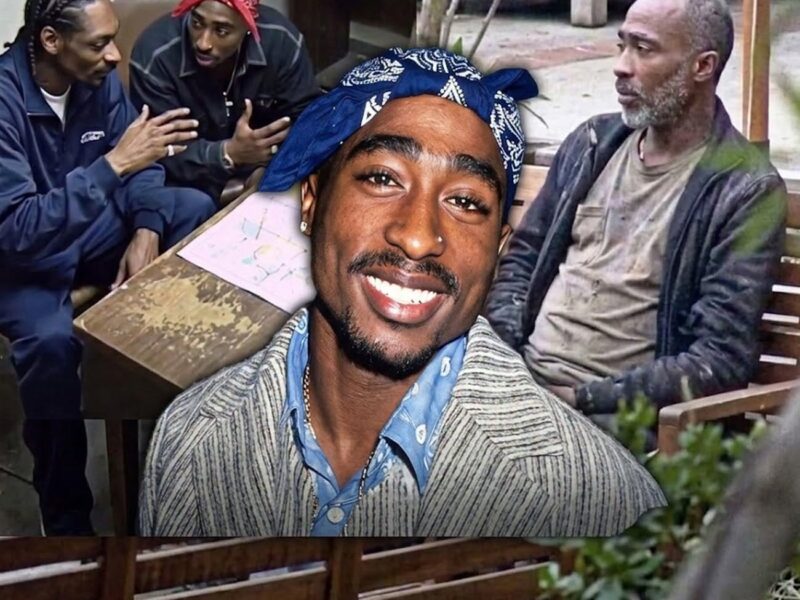
8 Hidden Tupac Footage That No One Was Supposed To See.
Few artists in music history have left behind a legacy as layered, controversial, and emotionally charged as Tupac Shakur. More than two decades after his death, his life remains a subject of fascination, investigation, and myth-making.
Among the most compelling pieces of that legacy are a series of rare tapes and recordings that captured Tupac in private, vulnerable, defiant, and deeply human moments.
Some were never meant for the public. Some were seized by police. Some vanished for years before resurfacing. Together, they form a rough, unscripted portrait of one of hip-hop’s most complicated icons.
These tapes reveal more than celebrity. They reveal a young man growing into fame, a man under pressure, a man fighting legal battles, and a man who seemed to sense, long before the world did, that his life was moving toward something tragic.
The 1991 Party Tape: Before the Legend
Long before Tupac became the tattooed prophet of West Coast hip-hop, before *All Eyez on Me*, before Death Row Records, and before the paranoia that would later define his final years, he was just a young, hungry performer with Digital Underground.
In 1991, he was still a skinny, bald-headed 20-year-old roadie and hype man finding his place in the industry.
That era produced one of the most infamous home videos in rap history. Shot at a house party, the tape ran for about five minutes and was recorded in a regular living room.
It opens on a room full of groupies, with Tupac walking in shirtless, chain swinging, moving with the confidence of someone who already believed he was destined for greatness.
An unreleased Tupac song plays in the background, a track that has never been properly identified, titled, or officially leaked. He raps along to his own unheard music, dances, drinks, smokes, and fully inhabits the energy of a young man living in the moment.
Then Money B of Digital Underground appears in frame, and the footage becomes even more valuable as a snapshot of Tupac’s earliest creative circle.
For years, the tape existed only as rumor on message boards. Then, in 2011, it surfaced publicly, sparking a bidding war among adult film companies. Money B never denied it.
In fact, he acknowledged the tape without hesitation, saying he knew it would eventually come out. Pac’s mother, Afeni Shakur, reportedly threatened legal action, but by the end of that year the tape had been sold to a private collector. It has never resurfaced in its full form, and any version online today is widely considered a fake or incomplete copy.
The Seized Hotel Tape: A Private Moment Turned Evidence
Another tape involving Tupac never circulated publicly because police took it. This one came from the Parker Meridian hotel in New York during the legal storm that followed Tupac’s November 1993 arrest in the case brought by Ayanna Jackson.
While detectives searched his suite for weapons and evidence, they found a video cassette showing Tupac with his girlfriend at the time, Desiree Smith.
Authorities later suggested the footage might support a broader pattern of behavior, and some reports implied the woman on the tape could have been intoxicated or underage. That claim later proved inaccurate.
In a 2022 interview, Desiree Smith clarified the truth herself: the tape captured a private, consensual moment between two adults who were dating.
She explained that she had been drinking, but she was not intoxicated to the point of not knowing what was happening, and she was of legal age.
She also said the footage had been old by the time police found it, something Tupac had apparently carried around with him for months.
What makes this tape especially tragic is how it was used. Instead of being treated as a private personal recording, it was transformed into a tool for prosecution and public suspicion.
Smith later said Tupac’s lawyer contacted her and advised her to stay quiet because if police learned who she really was, the media would descend on her.
She remained loyal to Tupac, even visiting him in prison and refusing to cooperate with narratives that painted him unfairly.
The tape itself disappeared into the evidence system and was likely destroyed, lost, or quietly returned. It remains one more ghost in the archive of Tupac’s life.
The Lost Prison Tapes: Tupac Unfiltered
If the hotel tape showed Tupac at a vulnerable private moment, the prison tapes captured him at his most reflective and intellectually revealing.
In late 1995, while incarcerated at Clinton Correctional Facility in New York, Tupac sat for a nearly 44-minute interview that would later be described as one of the most important documents of his life. For years, the tape was lost.
When it eventually reappeared, it showed a man stripped of fame, forced into stillness, and speaking with raw honesty about survival, faith, his mother, the streets, and the American system.
He spoke about how *Me Against the World* was succeeding while he was locked up, and he treated his own catalog like prophecy. He pointed out that he had rapped about going to prison and being shot before either event actually happened.
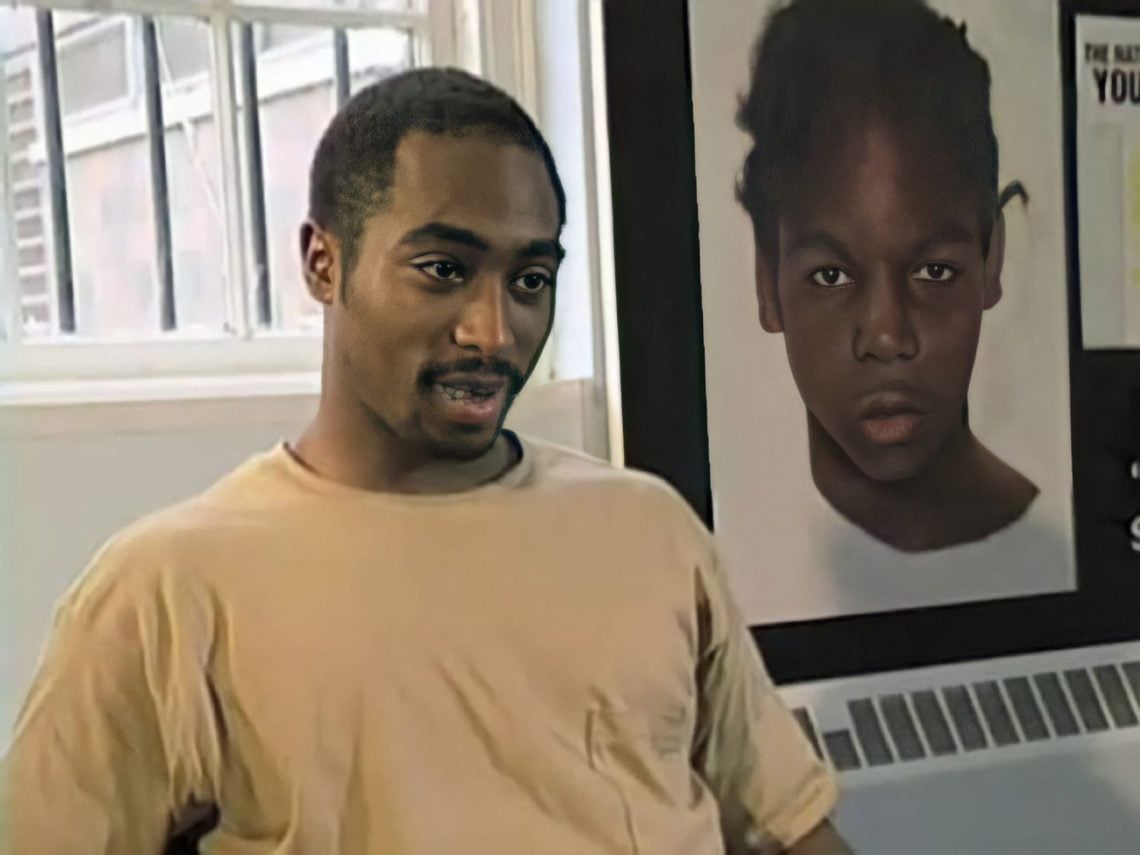
Rather than boast, he diagnosed himself. He described himself as a fighter, a soldier, and a struggler. At one point he delivered the unforgettable line: “Can’t nothing stop me but death itself.”
He also explained his philosophy about “thug life,” saying it wasn’t a costume or a gimmick. It was a stage of understanding, something real but meant to be outgrown. For him, it was both identity and lesson.
The interview also showed how deeply political Tupac’s thinking had become. He argued that America itself was built on gangs, naming the Republicans, Democrats, police, FBI, and CIA in the same breath.
To him, organized power and street power were not as different as people liked to believe. That kind of language helped make him dangerous to institutions and magnetic to fans.
The prison footage was eventually released on DVD around 2011, though copies have been repeatedly pulled from platforms over copyright issues. Even now, it remains one of the clearest windows into the thinking of Tupac Shakur.
The Plane Ride with Snoop Dogg: Tension Before the End
Another revealing story from Tupac’s final year comes not from a tape he made, but from one recalled by Snoop Dogg.
The story involves a tense private flight back to Los Angeles in 1996, after Snoop had been asked on the radio about his relationships with Puff Daddy and Biggie during the escalating East Coast-West Coast conflict.
Snoop answered honestly, saying he loved them and considered them his friends even in the middle of the war.
That answer reportedly angered Tupac. By the time Snoop returned to the hotel, the mood had shifted. Tupac no longer came to fetch weed himself; he sent someone else. Something had changed.
Then came the private plane ride. According to Snoop, Suge Knight would not allow Snoop’s own security to fly with him, leaving him boxed in on the jet with Suge, Suge’s people, and Tupac, who had gone cold on him.
Snoop said Tupac did not speak to him for most of the flight. At one point he tried to break the silence, only to be ignored.
Feeling threatened, he eventually went to the back of the plane, covered his head with a blanket, and prepared himself with a knife and fork in hand. It was a chilling illustration of how paranoid and fractured the Death Row environment had become.
Whether every detail of that flight is remembered the same way by everyone involved is still debated. But the emotional truth is clear: the last months of Tupac’s life were marked by mistrust, silence, and danger.
The Shooting at Quad Studios: The Birth of a New Tupac
To understand the hardness that defined Tupac’s final period, you have to return to November 30, 1994, when he was ambushed at Quad Recording Studios in New York.
He had gone there to record a verse for another artist and earn about $7,000 to help with legal bills. But in the lobby, he and his associate Stretch were confronted by armed men who demanded his jewelry and money.
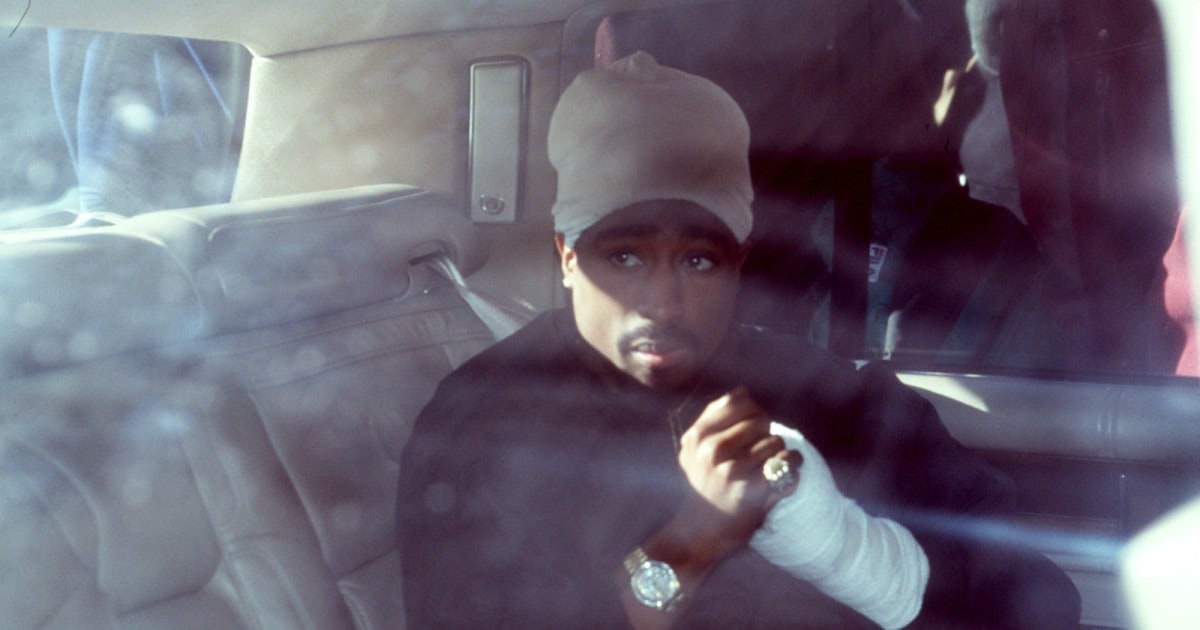
Tupac resisted. A struggle broke out. Shots were fired. He was hit five times—twice in the head, twice in the groin area, and once in the hand. He survived, but he was shaken, angry, and convinced it was a setup.
He left the hospital against doctor’s orders and stayed under protection. The next day, bandaged and defiant, he appeared in court for his abuse case.
The attack radicalized him further. He believed people in the New York scene, including some he once trusted, knew the shooting was coming. That belief helped ignite the East-West divide that would later define the final chapter of his life.
A video shot by photographer Ken Nahome later resurfaced online, showing Tupac shirtless, staring directly into the camera and speaking to the men who shot him. “I’m still here,” he said.
“All five bullets touched me, but you couldn’t kill me.” The clip became part boast, part prophecy, and part proof of how the shooting changed him forever.
The MGM Grand Lobby Fight: The Final Hours Before Tragedy
The most important footage in the Tupac story may be the security cameras from the MGM Grand in Las Vegas on September 7, 1996.
That night, Tupac, Suge Knight, and their entourage had just watched Mike Tyson’s fight. In the casino, they spotted Orlando “Baby Lane” Anderson, a Southside Compton figure with history against Death Row.
Weeks earlier, Anderson and others had allegedly tried to snatch a Death Row chain from one of the label’s associates. The tension was already there.
When Tupac learned who Anderson was, he moved toward him in the grainy black-and-white footage. He can be seen approaching, asking whether Anderson was from the South, and then throwing the first punch. His entourage piled in, kicking and stomping while Anderson was down.
The fight lasted less than a minute. Security broke it up. But two hours later, a white Cadillac pulled alongside Suge Knight’s black BMW at Flamingo Road and Koval Lane. Gunfire erupted. Tupac was hit four times. He died six days later.
The MGM footage has been analyzed endlessly because it captures the last moments of his life while he was still moving, still free, still alive. It is one of the clearest visual records of how quickly things spiraled into tragedy.
The Autopsy Photo: The Most Disturbing Image
After Tupac’s death, even more private and painful imagery entered the story. In 1997, a coroner’s exam-room photo of Tupac’s body leaked to journalist Kathy Scott and was published in her book *The Killing of Tupac Shakur* on the first anniversary of the murder.
The image showed his body on a gurney after surgery and autopsy, and it was widely described as gruesome.
The leak led to an internal investigation, though the source was never identified. The photo became one of the most controversial in hip-hop history, raising questions about dignity, privacy, and the public’s appetite for the final images of famous dead people.
It also had an unintended effect: instead of ending rumors, it helped fuel new conspiracy theories, including the persistent claim that Tupac had somehow staged his death.
Suge Knight’s Cigars and the Death Rumors
That brings the story to the last and most bizarre piece of footage: Suge Knight on TMZ in 2014, cigar in hand, claiming Tupac was still alive.
Standing on the street, Suge dismissed the idea that he had anything to do with Tupac’s death and then doubled down on the conspiracy.
He said Tupac was not dead, suggested people were lying, and argued that if Tupac had truly been murdered, someone would have already been arrested.
Then he offered the line that lit up the internet: Tupac was “somewhere smoking a Cuban cigar.”
For fans of the old Cuba theory, it was gasoline on the fire. But Suge’s comments have shifted over the years, sometimes sounding like doubt, sometimes like trolling, sometimes like grief, and sometimes like pure performance. The overwhelming evidence still points in one direction: Tupac Shakur died in 1996 from gunshot wounds in Las Vegas.
Still, the footage matters because it shows how legends survive. Even when the facts are settled, myth keeps breathing.
Conclusion
From party videos to prison interviews, from police evidence to death-scene images, the rare footage surrounding Tupac Shakur tells a story as powerful as his music. It shows a young artist becoming a revolutionary voice, a man trapped in violence and paranoia, and a legend whose image only grew larger after death.
These tapes are more than archival curiosities. They are fragments of a life that changed hip-hop forever. And together, they remind us why Tupac remains impossible to forget.