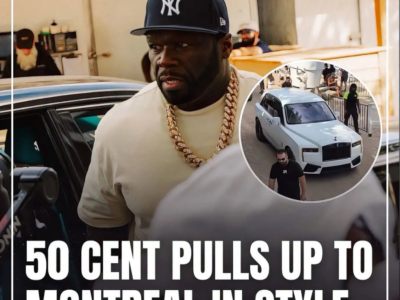
50 CENT SPARKS CONTROVERSY AFTER ALLEGED COMMENTS ABOUT LGBTQ+ THEMES IN CHILDREN’S CARTOONS — BUT THERE’S A TWIST
For a few days, the internet appeared convinced that 50 Cent had opened another major cultural debate.
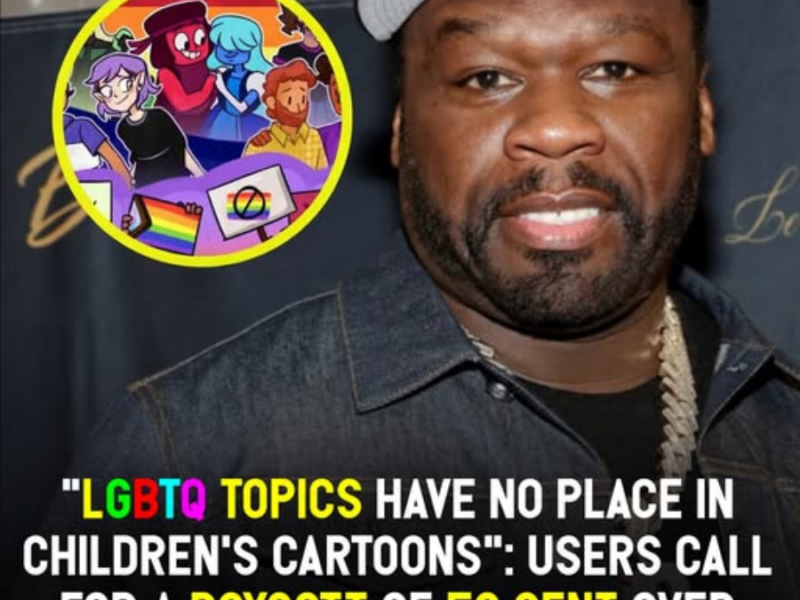
Viral posts claimed that the rapper had criticized LGBTQ+ themes in children’s cartoons and argued that children should be raised in a more “traditional” way.
The reaction was immediate.
Some people praised the alleged statement.
Others condemned it.
Calls for boycotts began circulating across social media.
And once again, 50 Cent’s name was at the center of an online firestorm.
But there was one problem.
The story wasn’t true.
THE CLAIM THAT EXPLODED ONLINE
The viral posts presented the story as if 50 Cent had publicly spoken about LGBTQ+ representation in children’s programming.
The wording was provocative.
It was perfectly designed for social media.
People immediately began arguing over whether children should be exposed to LGBTQ+ themes in cartoons, whether parents should control what their children watch, and whether children’s entertainment should stay away from controversial social issues.
The debate became bigger and bigger.
But when journalists and fact-checkers started looking for the original interview, video, or verified statement from 50 Cent, something unexpected happened.
They couldn’t find one.
Fact-checkers reported that there was no credible evidence that 50 Cent had actually made the statement attributed to him.
SO WHERE DID THE STORY COME FROM?
According to fact-checking investigations, the claim appears to have originated from social-media pages that create sensational celebrity stories designed to generate engagement.
Some of the posts were believed to have been produced with the help of artificial intelligence.
The formula is simple.
Take a celebrity who is already known for being outspoken.
Give that celebrity a provocative opinion.
Create a dramatic headline.
Add a photograph.
Then post it online.
Within hours, thousands of people can be discussing something that never happened.
And that’s essentially what happened here.
WHY DID SO MANY PEOPLE BELIEVE IT?
This is perhaps the most interesting part of the story.
50 Cent has a long history of making provocative statements and generating controversy.
That history made the fabricated quote sound believable to some readers.
In fact, the rapper has faced criticism for remarks concerning LGBTQ+ people in the past. In a 2004 Playboy interview, he made comments that drew criticism from GLAAD and others.
But that doesn’t make every quote attributed to him authentic.
A celebrity’s past can make a false story feel real.
And that’s exactly why misinformation can be so powerful.

50 CENT’S OWN HISTORY IS MORE COMPLICATED
There is another detail that makes the viral story particularly interesting.
In 2013, while discussing the television series Dream School, 50 Cent spoke about helping a transgender student and said he did not have homophobia. TheWrap reported that he supported the teenager’s educational aspirations.
That doesn’t erase controversial things he has said in the past.
But it does show why reducing a complicated public figure to one viral quote can be misleading.
People can change.
People can contradict themselves.
And, most importantly, people can be falsely quoted.
THE INTERNET REACTED BEFORE CHECKING
By the time fact-checkers investigated the claim, the argument had already spread.
Supporters were celebrating.
Critics were angry.
Others were calling for boycotts.
People were debating the supposed statement without first establishing whether the statement had ever been made.
That is the dangerous part.
The controversy was real.
The quote wasn’t.
And by the time the truth caught up, thousands of people had already formed opinions.
THIS IS BIGGER THAN 50 CENT
The story isn’t really about one rapper.
It’s about how celebrity misinformation works in the age of AI.
A fake quote can now be written in seconds.
A realistic-looking image can be generated.
A fictional story can be presented as breaking news.
And algorithms don’t care whether something is true.
They care whether people click.
Whether people comment.
Whether people argue.
Whether people share.
A calm, accurate headline might receive a few hundred views.
A shocking celebrity statement can receive millions.
That’s the incentive.
THE LESSON FROM THE 50 CENT CONTROVERSY
Before believing a shocking celebrity quote, ask three simple questions:
Where is the original video?
Where is the full interview?
Has a reputable news organization independently verified it?
If none of those things exist, the story deserves skepticism.
Especially when the headline is designed to make you angry.
Because anger spreads faster than facts.
THE REAL CONTROVERSY
There is absolutely a legitimate public conversation about what children should watch, how parents approach LGBTQ+ representation, and what role children’s entertainment should play in teaching children about the world.
People can disagree strongly about those issues.
But that debate should happen using real statements and real evidence.
Not fabricated celebrity quotes.
Not AI-generated stories.
Not viral posts created simply to provoke outrage.
And in the case of 50 Cent, the available fact-checking evidence points to a simple conclusion:
He did not make the viral statement attributed to him about keeping LGBTQ+ themes out of children’s cartoons.
The internet may have wanted another 50 Cent controversy.
Instead, it got something perhaps even more revealing:
a powerful demonstration of how easily a completely fabricated celebrity story can become “breaking news.”
And that’s the part we should be talking about.