Mick Jagger Reveals the Rolling Stones’ Feud with The Beatles Was a PR Stunt
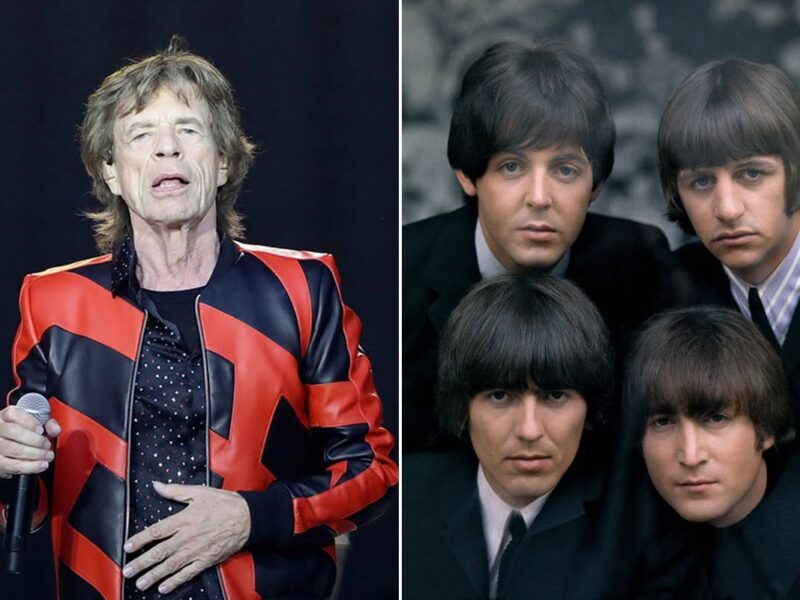
Mick Jagger recently opened up about the long-rumored rivalry between the Rolling Stones and the Beatles.
The Rolling Stones frontman admitted that the so-called “feud” between the two iconic bands was a mix of reality and carefully crafted public relations, rather than a purely genuine conflict.
“I think there was an element of truth in it, but I think there was an element of PR in it, too,” Jagger said.
He also pointed to the geographic dimension of the rivalry, drawing a parallel to modern-day city rivalries in the United States.

“It was also London [versus] Liverpool, so it’s a bit like L.A. [and] New York,” he continued. “Obviously, that was a good talking point for press to get on.”
Jagger’s candid remarks shed new light on one of rock music’s most enduring narratives. They suggest that the media played a significant role in amplifying — and perhaps even shaping — the perceived tension between the two groups.
The history between the two bands tells a more nuanced story — one that points far more to mutual respect than to genuine animosity. The rivalry was largely a media construction, cooked up to pit the two bands against each other and drive public interest. The press found a compelling angle in the contrast between the Beatles’ polished image and the Stones’ rougher, blues-driven identity, and ran with it for years.
In reality, the two camps shared a meaningful early connection. John Lennon and Paul McCartney wrote “I Wanna Be Your Man” for the Rolling Stones, handing the band one of their early singles — a gesture that speaks to collaboration rather than competition.
The relationship between the two groups remained cordial over the years. Keith Richards later joined John Lennon in The Dirty Mac, a supergroup assembled for the Rolling Stones’ Rock and Roll Circus special. This further underlined the bonds that existed beneath the surface of the so-called rivalry.
Jagger’s comments carry particular weight coming from the man at the center of it. His willingness to address the myth directly closes a chapter on one of rock history’s most persistently misread stories.