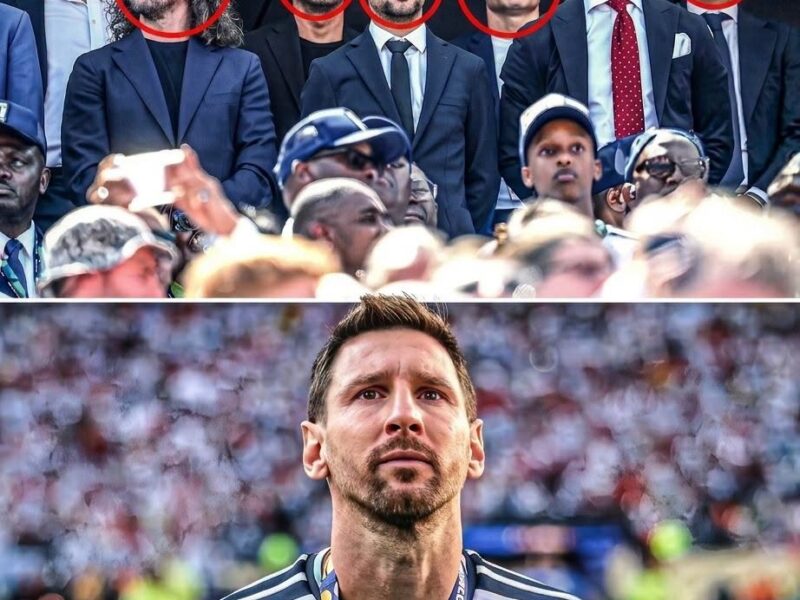
Messi and the moment that marks the end of an era.
In the early hours of July 20th, Vietnam time, Argentina lost to Spain 0-1 after 120 minutes in the 2026 World Cup final. That was the night Messi sat silently on the field, breaking down in tears as he received his silver medal, while Spain embarked on a new era of success with the European Championship and the World Cup.
Messi and the loneliness of a legend.
There are finals that don’t need many goals to become lasting memories. Spain beat Argentina 1-0 with a goal from Ferran Torres in the 106th minute, but the biggest story after the final whistle wasn’t just about the champions. It was also about the image of Lionel Messi sitting quietly on the pitch, his eyes distant, as if trying to accept a truth he had fought to the very end to avoid.
It was a very Messi moment, but also very human.
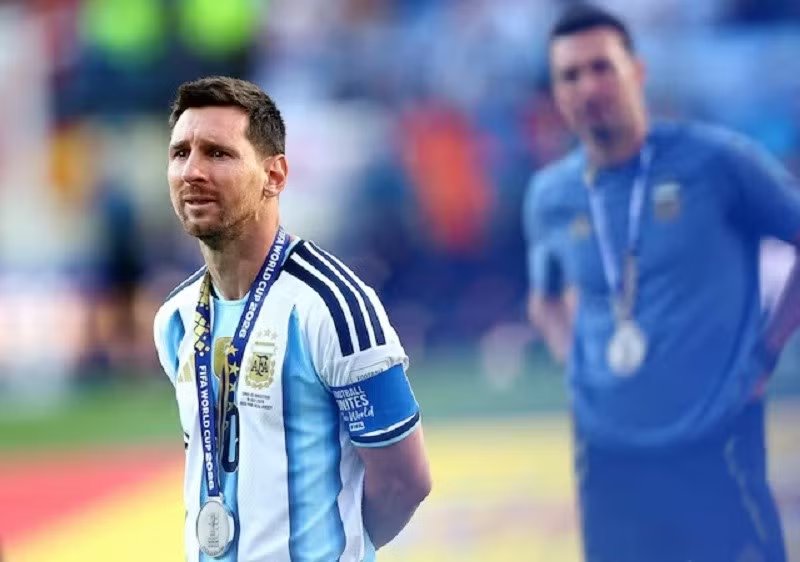 Messi with tears in his eyes after the 2026 World Cup final. Photo: Reuters.
Throughout his career, Messi has been accustomed to the spotlight, the cheers, and the legendary nights he orchestrated. But in the 2026 World Cup final, he will be present in a different role: a witness to a dream slipping away, a helpless captain against an opponent who plays too tightly, too intelligently, and too perfectly.
After the match, as the Argentinian players rose one by one, embracing and comforting each other, Messi remained seated for a while longer. The Argentinian number 10 didn’t need to say anything. That silence was heavy enough. It contained the exhaustion of 120 minutes, the regret of a final that couldn’t be turned around, and the feeling of someone who understood that time was no longer on his side.
Then came the awards ceremony. After receiving the silver medal, Messi broke down in tears. Not tears of defeat, but the tears of a legend who had experienced so much glory that he understood the value of failure. People had seen Messi cry for Argentina, seen him suffer over missed finals, seen him bear the weight of an entire nation on his shoulders. But this time, the sadness seemed deeper, quieter, and therefore more painful.
Because Messi is no longer the young man who used to be asked when he would win a championship with his national team. He has everything. He has conquered the greatest peaks. He has left behind a monumental career that will likely take a very long time for world football to find someone capable of surpassing it. Therefore, this defeat does not diminish him. On the contrary, it makes people see his greatness even more clearly: a man who has won so much, yet still feels the pain of not being able to win one last match.
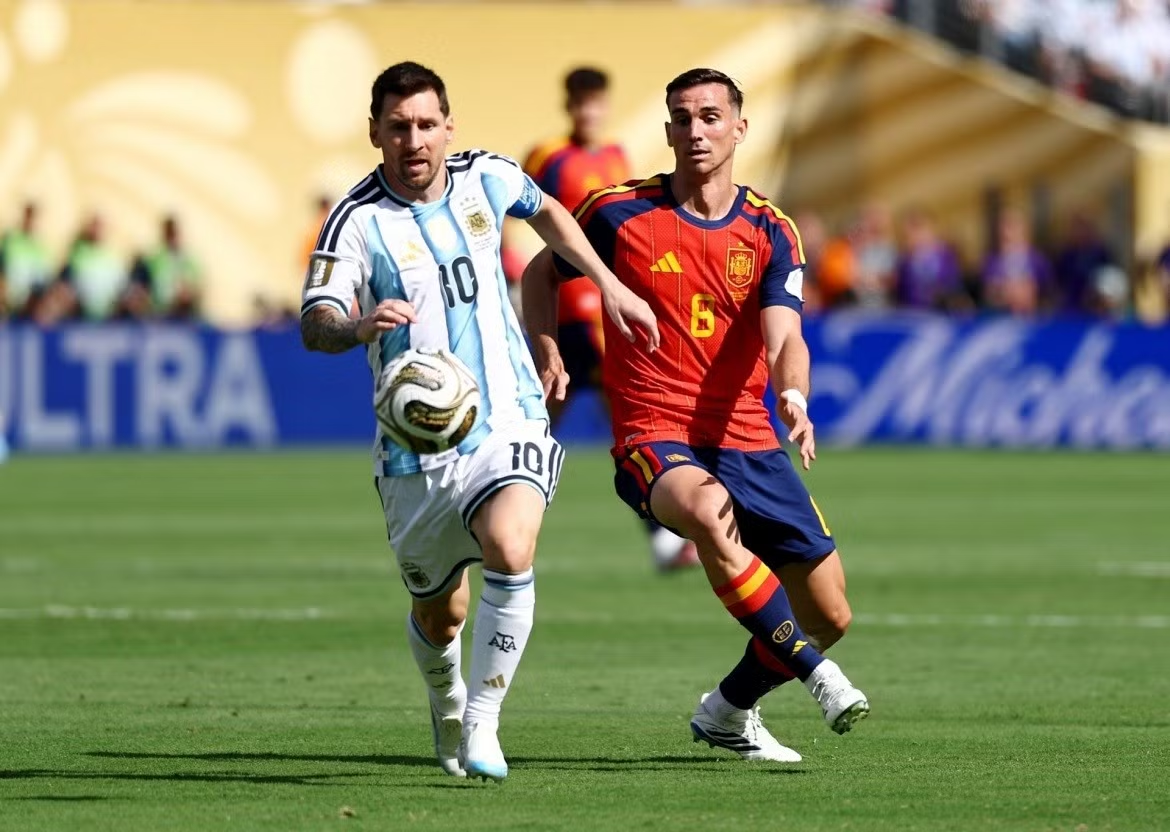 Messi tried his best but was unable to create a breakthrough against Spain’s tight defense. Photo: Reuters.
Argentina lost, but Messi wasn’t left behind.
As he prepared to enter the tunnel, the large crowd of Argentinian fans continued chanting his name. Not to demand another miracle. Not to reproach him. But as a tribute to a living legend. That chant echoed on a somber night, yet it possessed a unique beauty of football: the beauty of gratitude.
Argentinians understand just how much Messi has given them. He hasn’t just given them titles. He gave them faith, sleepless nights, and the feeling of living alongside a rare genius. And even when the final ended with a silver medal, their love for him remained unchanged.
But this very match also revealed a harsh truth: no matter how great Messi is, he cannot overcome all limitations alone.
Spain prepared Messi as they would prepare the heart of Argentina. They didn’t rush at him impulsively, nor did they let emotions dictate their defensive approach. Instead, they chose to trouble him little by little: cutting off passes into the center, narrowing the space between the lines, applying pressure the moment he turned, and always maintaining sufficient numbers behind him to avoid being drawn into unexpected plays.
Messi didn’t disappear because he lacked ambition. He was overshadowed by a system that knew how to stifle the conditions for genius to shine.
There are times when Messi has to drop very deep to receive the ball. That’s not good news for Argentina. When the number 10 has to leave the penalty area, his team loses someone capable of making a difference in the most dangerous zone.
But if Messi doesn’t drop back, the ball doesn’t reach his feet. Argentina fell into that frustrating cycle for much of the match: they needed Messi to relieve pressure, but the deeper they pulled Messi back, the more they lacked him up front.
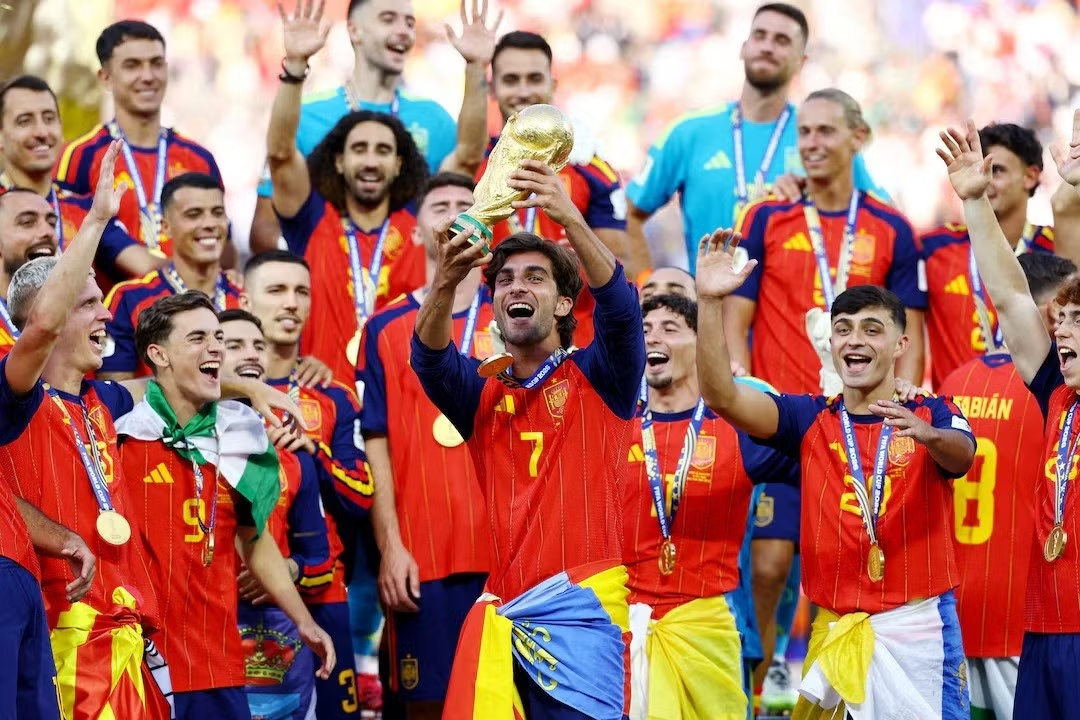 Spain won the World Cup for the second time. Photo: Reuters.
A genius can solve many problems. But he can’t simultaneously be a press-breaking player, a playmaker, a creator, and a finisher, especially when surrounded by a Spanish team that operates with almost cold, synchronized precision.
Argentina didn’t lack spirit. They still fought, still clashed, still maintained the pride of a great team. But against Spain, they lacked fluidity. Argentina’s attacks were often broken down early. Counter-attacking passes weren’t quick enough. The areas receiving the ball up front weren’t wide enough. And Messi, instead of being given space to weave his way through, often only received heavy balls while surrounded by defenders.
Enzo Fernández’s red card made things even more difficult. Enzo was a crucial link in the connection between the midfield and the attack. When he left the field, Argentina lost another link in getting the ball to Messi in good form. From then on, the South American team’s efforts became more defensive than defensive.
However, to be fair, Argentina didn’t just lose because of the red card. Before that, Spain had been the better team. They controlled the tempo better, created more sustained pressure, and came close to scoring on several occasions.
In particular, Spain had two goals disallowed against Argentina. Those situations made the feeling that La Roja’s goals were achievable: they weren’t random, but the result of a patient, relentless pressing.
At the other end of the pitch, Emiliano Martínez continued to show why he is one of the most composed goalkeepers in the world. He kept Argentina in the game with his assured saves, his strong presence in the penalty area, and his ability to keep his team’s hopes alive. But a goalkeeper, however excellent, cannot forever withstand a game where his team is forced to defend too much and attack too little.
In the 106th minute, Ferran Torres scored. A clean, precise, one-touch finish, without any frills. In a final, sometimes history is written in simple moments like this. Spain had waited long enough, been denied enough, and been patient enough. When the opportunity truly presented itself, they didn’t miss.
Argentina then tried to fight back. Messi was still searching for the ball. He still wanted to pull the game back from the brink of disaster one more time. But the final minutes were no longer a place for miracles. Argentina’s legs felt heavier, their ideas diminished, and Spain defended with the order of a team that understood they were only a few breaths away from glory.
When the final whistle blew, Argentina became the team with the most runner-up finishes in World Cup history, the same number as Germany. This statistic both highlights their stature and evokes a sense of pain. To finish second so many times, a team must be strong enough to go very far. But in the final match, they found themselves standing so close to the summit, yet unable to reach it.
For Messi, this silver medal won’t redefine his career. It only adds a somber note to an already magnificent picture. Messi remains one of the greatest players football has ever produced. He has won titles, broken records, created unreplicable moments, inspired generations, and changed the way people view the beauty of football.
It may be a long time before the world sees another player who is both extraordinarily effective and plays with such mesmerizing beauty. A player who wins not only through goals or titles, but also by captivating millions of football fans with just a single touch of the ball.
Therefore, Messi’s tears after the final didn’t weaken him. Instead, they brought him closer to everyone. They reminded us that behind an icon is still a human being who knows pain, regret, and tears when dreams are not fulfilled. And perhaps that’s also why Argentinian fans still chanted his name as he left the field: they weren’t just honoring a player, they were honoring the entire journey.
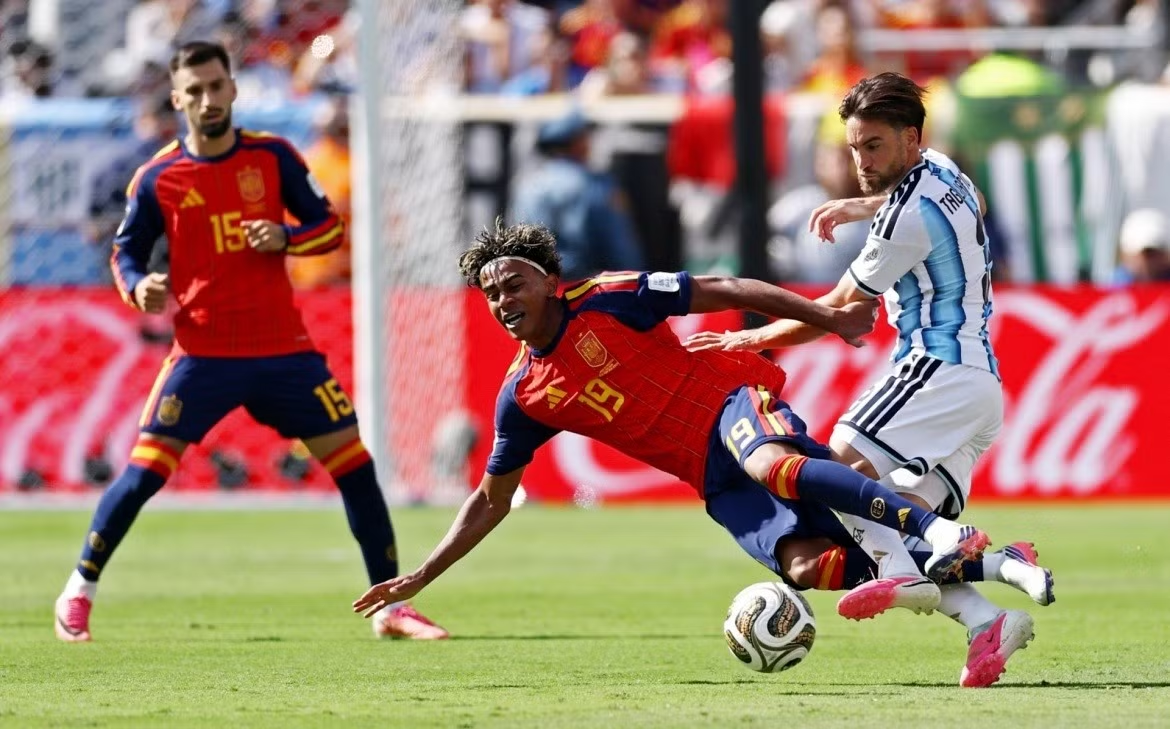 Although Yamal is not yet at his best, he remains an extremely important player in the Spanish team. Photo: Reuters.
Yamal, Spain, and a new cycle of success.
If Messi is the image of a legend passing through the final, brilliant, and emotional chapters of his career, then Spain is the image of a new era unfolding. The 1-0 victory against Argentina not only propelled them to the top of the 2026 World Cup, but also marked the beginning of a new cycle of success for La Roja, with a European Championship and a World Cup title within the same period of triumph.
This is the most noteworthy thing about Spain today: they don’t live on memories. After the golden generation that dominated the world with tiki-taka, Spanish football struggled during a transitional period. But instead of just reminiscing about Xavi, Iniesta, Busquets, or Casillas, they built a new version of themselves.
Spain still dominated possession today, still prioritizing control, but they were no longer so predictable. They were more direct, faster, had more attacking options down the flanks, and knew how to press with greater intensity. They haven’t abandoned their identity, but they’re not trapped by the past either. That’s a sign of a great team that knows how to evolve.
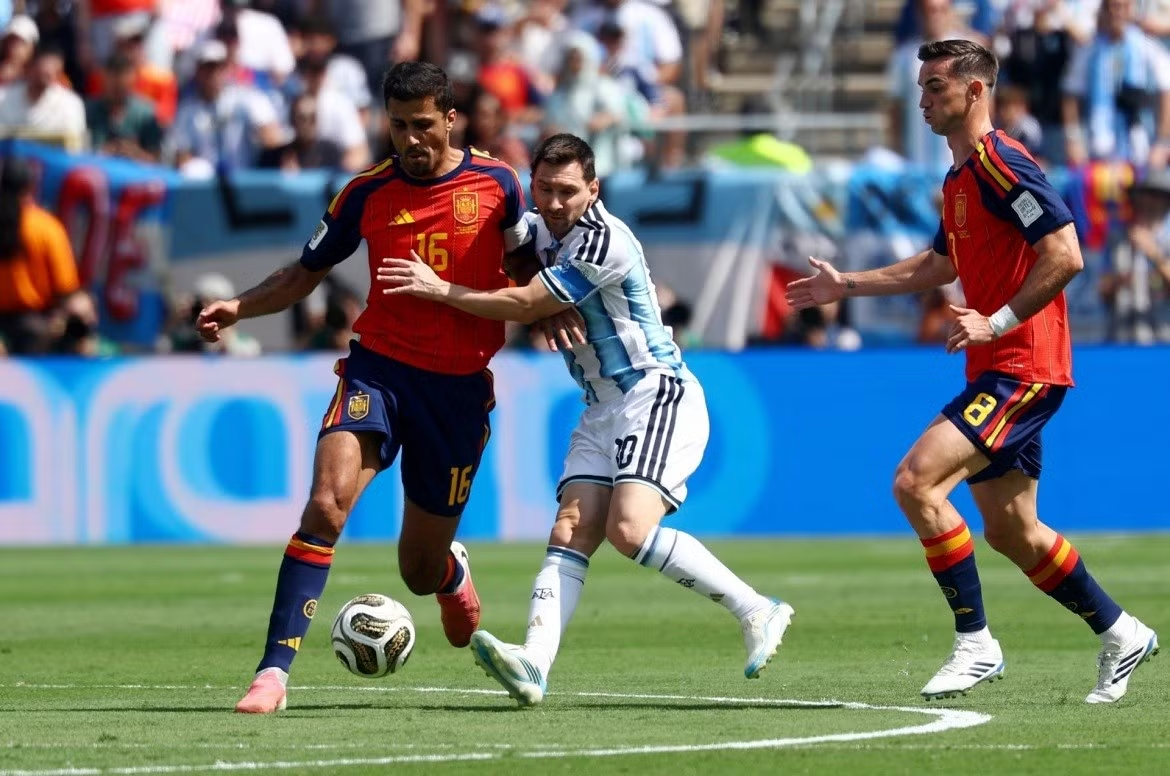 Rodri – the best player of the 2026 World Cup – made a huge contribution to Spain not only in the final but throughout their entire World Cup campaign. Photo: Reuters.
The final is a clear example. Spain controlled the ball not for show, but to wear down Argentina. They passed not just to keep possession, but to draw their opponents out of position. They didn’t attack hastily, but always knew how to accelerate in small spaces.
When their goal was disallowed twice, they didn’t panic. When Emiliano Martínez kept Argentina on the field, they didn’t lose heart. When the game went into extra time, they didn’t lose their composure.
That’s the quality of a champion.
Ferran Torres scored the winning goal, but this victory doesn’t belong to him alone. It belongs to an entire team that prepared, persevered, and believed in their game until the very end.
In a team like that, the hero can emerge from many positions. Today it’s Ferran. Tomorrow it could be someone else. It’s this distribution of responsibility that makes Spain so formidable.
And at the end of the story, we cannot fail to mention Lamine Yamal.
Yamal is the best symbol of Spain’s future. He didn’t need to score in the final to be remembered. His presence, his confidence, his daring moves in a big match spoke volumes. At such a young age, Yamal played as if the big stage didn’t diminish him. He dared to receive the ball, dared to challenge for the ball, dared to create breakthroughs, but still remained disciplined.
That’s the special thing. Spain didn’t turn Yamal into an individual who had to carry the whole team. They placed him in a good structure, where talent is nurtured instead of being left to chance. Yamal has the right to take risks, because behind him is a solid system. He has the right to be creative, because around him are teammates who know how to move to open up options.
The image of Yamal on one side of the battlefield and Messi on the other creates a powerful contrast. One is a living legend, a man who defined an entire era. The other is the face of the future, taking his first steps on what could be a long and glorious path. Football sometimes transitions not with declarations, but with nights like this: a great genius leaves the field in tears, while a new generation lifts the trophy.
But we also need to be fair to Yamal. He’s not Messi, and he shouldn’t have to become Messi. Messi’s greatness is unique. What Spain needs from Yamal is for him to continue growing in his own way, in the right environment, with a team strong enough to prevent his talent from being burdened by expectations too early.
Spain currently possesses what every football nation dreams of: titles in the present and belief in the future. They have the Euros, the World Cup, a generation in its prime, young talents like Yamal, and a style of play that is both graceful enough to be beautiful and sharp enough to win.
As for Messi, even though he left the final with a silver medal and tears, he still left the field to the cheers of his fans. That’s the beautiful paradox of football: the loser is sometimes honored like a king, because his journey is greater than the result.
That night, Spain triumphed. Yamal and the new generation entered the spotlight. But on the other side, Messi also left an unforgettable image: sitting silently on the pitch, breaking down in tears with his silver medal, then walking into the tunnel to the cheers of the Argentinian fans.
A new champion has been born. A living legend has been honored. And football, in both joy and sorrow, remains breathtakingly beautiful.