Boosie Uses “Save Our Sons” Event to Encourage Young Men to Choose Dreams Over the Streets
Boosie’s “Save Our Sons” Event Shows Another Side of Hip-Hop’s Responsibility
Boosie has spent much of his career making headlines for reasons that have little to do with community mentorship. His music, public comments, legal history, and outspoken personality have regularly made him a subject of controversy. But when an artist is covered extensively during moments of controversy, there should also be room to acknowledge the moments when that same artist chooses to pour something positive back into the community.
This past weekend offered one of those moments.
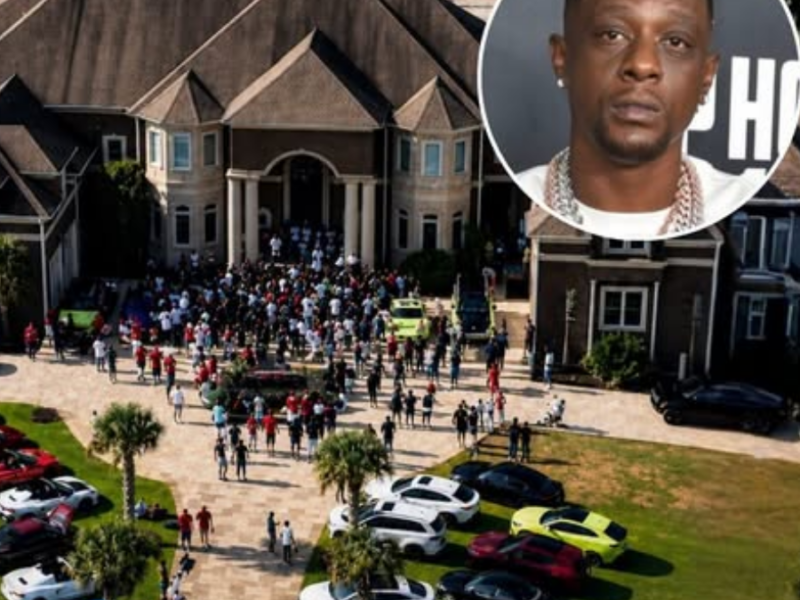
Boosie hosted teens and young men from the Next Level Boys Academy at his Palmetto, Georgia home as part of a “Save Our Sons” event focused on encouraging young men to stay away from violence, overcome adversity, and pursue their goals. CBS Atlanta documented the gathering, putting cameras on something Hip-Hop audiences don’t always get to see when it comes to artists whose public images have largely been shaped by controversy.
This wasn’t simply Boosie standing behind a microphone telling kids to “do better.” There is significance in bringing young men into his environment and allowing them to hear directly from someone who understands the attraction, consequences, pressures, and realities associated with the streets.
That distinction matters.
Boosie’s music has never hidden where he comes from. Much of his catalog has been informed by Baton Rouge, poverty, survival, violence, incarceration, family, loss, and street culture. Those experiences have also contributed to criticism of his music and public persona. But those same experiences can give his words a different weight when he’s sitting across from a teenager facing decisions that could determine the direction of his life.
A lecture about the streets is one thing.
Hearing from somebody who has actually survived them is another.
The young men attending the event came through Next Level Boys Academy, an organization founded by Gary Davis Sr. in 2009. The organization works with youth and young adult males through prevention and intervention programs that include academic assistance, leadership development, mentorship, and social-emotional learning.
Its work extends beyond motivational speaking. Reporting on the organization has highlighted a diversion program in which young people can enter a structured curriculum providing life skills, community, and support rather than simply continuing through the traditional juvenile justice process.
That makes Boosie’s participation particularly interesting.
Hip-Hop has spent decades debating the responsibility artists have for the messages contained in their music. Rappers are frequently asked whether violent lyrics influence young listeners. Artists often respond that their records describe environments that already exist rather than create them.
There may never be universal agreement on that argument.
But mentorship moves the conversation somewhere more productive.
An artist doesn’t necessarily have to rewrite his entire catalog to tell a teenager that he doesn’t want him repeating every experience described in those records. In fact, there is something powerful about being able to say: I lived this, but you don’t have to.
That is where an event like “Save Our Sons” becomes bigger than celebrity philanthropy.
Young people growing up around violence don’t necessarily need another famous person pretending those conditions don’t exist. They need credible voices capable of acknowledging the reality while showing that the reality doesn’t have to determine the ending.
Boosie occupies an unusual position in that conversation. To many young listeners, he isn’t an outsider analyzing street culture. His credibility was built partly from telling stories connected to those environments. That gives him an opportunity — and perhaps a responsibility — to use some of that influence beyond entertainment.
It also raises a question for Hip-Hop media.
Are we equally interested when rappers try to prevent the things we criticize them for describing?
Controversy travels quickly. An inflammatory quote can become dozens of headlines, social posts, reaction videos, and debates within hours. Community work rarely receives the same amplification.
That doesn’t mean positive actions should erase legitimate criticism. Accountability shouldn’t disappear because somebody hosts a youth event. But accountability should also be intellectually consistent. If an artist’s influence matters when we’re discussing the potential negative impact of his words, that influence should matter when he uses it to encourage young men to choose something different.
Boosie didn’t solve youth violence by opening his home for an afternoon. No single event could.
What he did was participate.
He showed young men that somebody they recognize was willing to spend time talking to them about their futures. He partnered with people already doing the daily work. And he used his visibility to put additional attention on a mission centered around helping young men find another path.
That deserves coverage too.
Hip-Hop has always been complicated because the people who create it are complicated. Artists can carry contradictions. Someone can have lyrics we question, opinions we disagree with, mistakes in his past, and still do something meaningful for another person.
The culture shouldn’t require perfection before acknowledging progress.
If we’re going to put microphones and cameras in front of rappers when they’re at their worst, there should be just as much willingness to turn those cameras on when they’re trying to give the next generation something better.
This weekend, Boosie gave us one of those moments.
And perhaps the most important message wasn’t about Boosie at all.
It was the message delivered to the young men standing in front of him: